Uncategorized

Aluminium Extrusion for Wind Turbine & Renewable Energy Components

Aluminium Extrusion for Wind Turbine & Renewable Energy Components: Why OEMs Are Moving Away from Steel

Steel has been the default material for structural and housing components in wind energy for decades, and for good reason — it’s strong, well-understood, and widely available. But over the past several years, a growing number of wind turbine and broader renewable energy OEMs have been shifting specific components from steel fabrication to aluminium extrusion, …
Open Die vs Closed Die Forging

Open Die vs Closed Die Forging: Which Process Is Right for Heavy Engineering & Off-Road Truck Parts?

For engineers specifying axle components, suspension parts, drive-train elements, or structural members for heavy engineering and off-road equipment, one of the earliest and most consequential decisions is the forming process itself: open die forging or closed die forging. Both produce the grain-refined, high-strength forgings this kind of equipment demands — but they arrive there through …

Fabricated vs. Cast Components

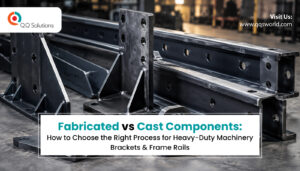
Fabricated vs. Cast Components: How to Choose the Right Process for Heavy-Duty Machinery Brackets & Frame Rails

Brackets, mounting plates, and frame rails are the unglamorous backbone of heavy-duty machinery and also one of the most common places where the wrong manufacturing process gets locked in early, then quietly inflates cost or creates field failures for years. The choice between welded/fabricated construction and cast construction isn’t obvious from the part drawing alone. …

recision-engineered components

From Cost-Driven Production to Innovation-Led Manufacturing: The Q&Q Solutions Story

There is a version of Indian manufacturing that the world has known for decades. It is a version built on a single, well-worn proposition: we can make it cheaper. Lower labour costs, lower overheads, lower price — and for a long time, that proposition was enough. Global OEMs sourced from India because it saved money. …

Sand Casting Foundry

How a Sand Casting Foundry Supports Scalable Manufacturing

In today’s evolving manufacturing environment, businesses need production processes that are flexible, cost-effective, and scalable. From early-stage prototypes to full-scale industrial production, sand casting continues to play a vital role in delivering reliable metal components across industries. A capable sand casting foundry enables manufacturers to test designs, refine components, and scale production efficiently—without compromising quality …

Investment Casting vs Die Casting

Investment Casting vs Die Casting: Choosing the Right Process for Your Application

Selecting the right metal casting process is a critical decision that directly impacts component performance, cost efficiency, production volume, and long-term scalability. Two of the most widely used precision casting methods—Investment Casting and Die Casting—each offer distinct advantages depending on the application. For global OEMs and industrial buyers, understanding the difference between these processes is …

Casting Drawings

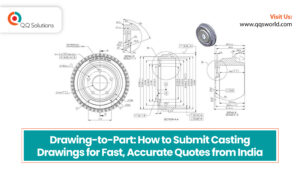
Drawing-to-Part: How to Submit Casting Drawings for Fast, Accurate Quotes from India

One of the most consistent sources of delay in the casting sourcing process is not the supplier’s response time. It is the quality of the information the buyer provides. An incomplete or ambiguous drawing package arriving at an Indian foundry will produce one of two outcomes: a delayed quote while the supplier tries to resolve …

Precision Machined Castings from India vs China

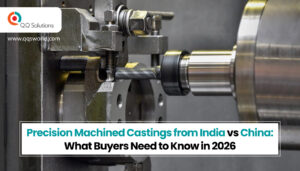
Precision Machined Castings from India vs China: What Buyers Need to Know in 2026

For the better part of two decades, China was the default answer whenever a procurement manager needed machined castings at scale. The combination of low labour costs, massive foundry capacity, and an aggressive export infrastructure made it almost impossible to argue against. But 2026 looks different. Supply chains have been stress-tested, geopolitical tensions have reshaped …