

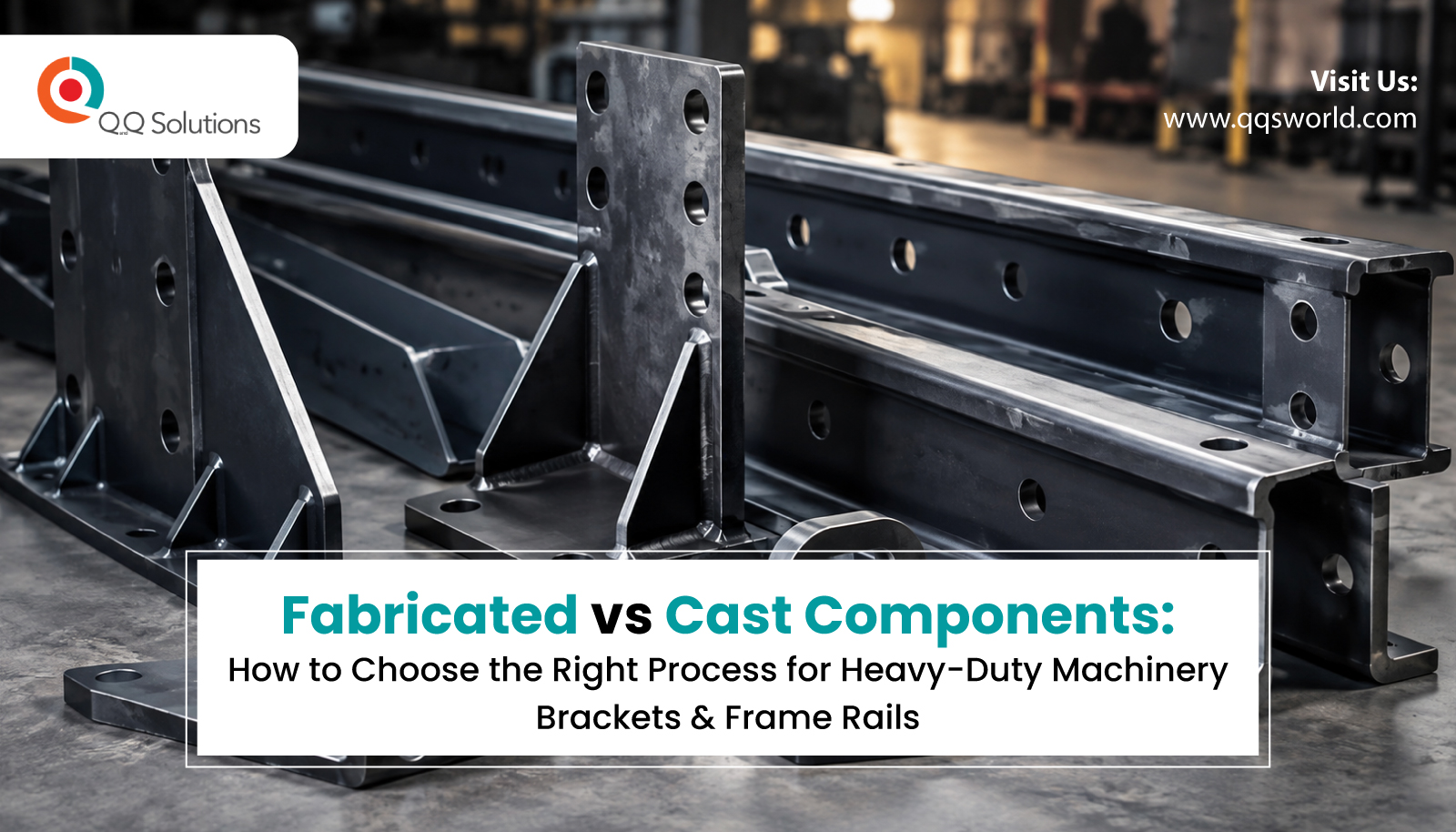
Fabricated vs. Cast Components: How to Choose the Right Process for Heavy-Duty Machinery Brackets & Frame Rails
August 25, 2026
Brackets, mounting plates, and frame rails are the unglamorous backbone of heavy-duty machinery and also one of the most common places where the wrong manufacturing process gets locked in early, then quietly inflates cost or creates field failures for years. The choice between welded/fabricated construction and cast construction isn’t obvious from the part drawing alone. It depends on volume, load profile, geometry complexity, and how the part will actually be inspected and maintained in the field.
This guide lays out how to make that call deliberately, rather than defaulting to whichever process your last supplier happened to offer.
Two Fundamentally Different Approaches
Fabrication builds the component from cut, formed, and welded plate or structural steel sections, joined at seams designed by the engineer. Geometry is essentially unlimited; any shape achievable through cutting and welding is on the table and no tooling is required beyond cutting templates or fixtures.
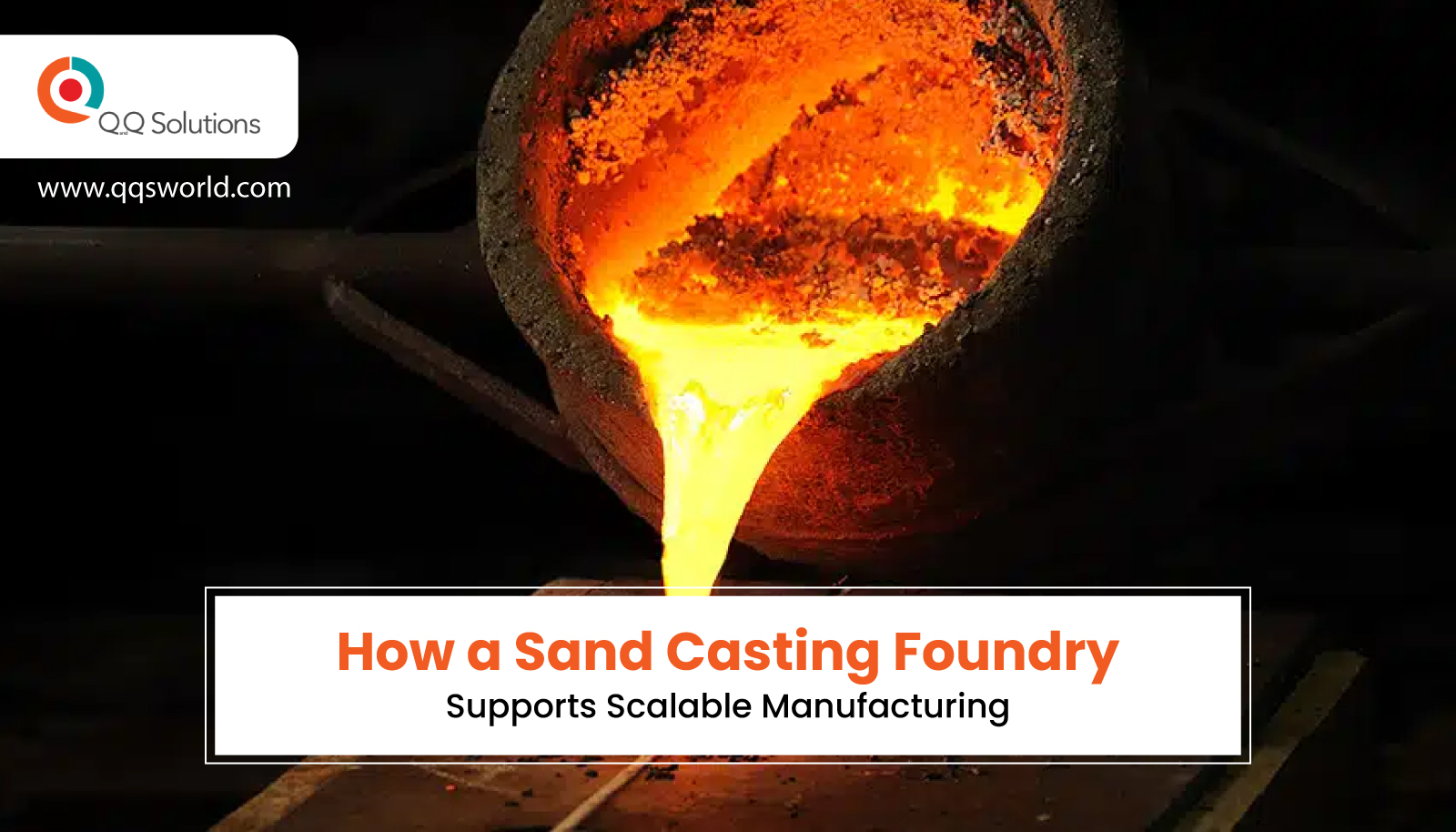
Casting pours molten metal into a mold shaped to the part geometry (sand casting for larger, lower-volume parts; investment casting for higher precision and more complex detail; ductile iron casting for parts needing a specific combination of strength and machinability). The part comes out of the mold as a single, monolithic piece, then typically goes through fettling, heat treatment, and CNC machining to reach final dimensions on critical features.
Comparing the Two Processes Where It Actually Matters
Structural integrity and stress concentration This is the most consequential engineering difference. Welded fabrications carry inherent stress concentrations at every weld toe and heat-affected zone, and are only as reliable as the weld quality and the fatigue design accounting for those joints. Cast components are monolithic; no weld seams, no HAZ, and load paths that can be optimized as continuous curves rather than constrained by where a fabricator can physically place a weld. For components under sustained cyclic or shock loading which describes most heavy machinery brackets and frame rails in actual service; this monolithic structure is a real fatigue-life advantage.
Tooling investment and volume breakpoint Fabrication requires no part-specific tooling, just cutting programs and weld fixtures, making it the natural choice for one-off parts, prototypes, and low volumes. Casting requires a pattern (wood, metal, or 3D-printed for prototypes) and, for investment casting, tooling for the wax pattern — a real upfront cost that needs volume to amortize. The typical breakpoint where casting becomes more economical than fabrication, for moderately complex brackets, tends to fall somewhere in the low hundreds of pieces annually, though this varies significantly with part size and geometry complexity.
Geometric freedom and part consolidation Casting genuinely wins here for complex geometry: internal ribbing, variable wall thickness for weight optimization, curved load paths, and integrated features (bosses, brackets, mounting points) that would otherwise require multiple fabricated pieces welded together. Consolidating what would be a five-piece welded assembly into a single casting eliminates weld joints, reduces assembly labor, and often reduces total part weight because material can be placed exactly where the load path needs it rather than following available plate stock shapes.
Lead time Fabrication generally has a faster path to first parts since there’s no pattern or mold to produce; cutting and welding can start almost immediately from a finalized drawing. Casting requires pattern development and mold qualification before the first part comes off the line, adding real lead time upfront (though this is a one-time cost that doesn’t repeat on reorders).
Dimensional consistency across a production run Fabricated parts accumulate dimensional variation from cutting tolerance, fit-up, and weld shrinkage/distortion at every joint; variation that compounds across a multi-piece assembly. Cast parts, once the pattern and process are qualified, produce highly repeatable geometry batch to batch, which matters significantly for interchangeability in service and for downstream CNC machining that assumes consistent stock allowance.
Material and section thickness flexibility Fabrication is efficient for parts built primarily from uniform-thickness plate or structural sections. Casting is the better choice when the part genuinely needs variable wall thickness — thicker sections at high-load points, thinner sections elsewhere to save weight — since that variation is essentially free to design into a mold but expensive to achieve by welding plates of different thicknesses together.
Where Each Process Fits for Brackets and Frame Rails
Fabrication makes sense for:
- Low-volume or custom brackets, particularly for specialized or one-off heavy equipment
- Large frame rails and structural members primarily built from standard structural steel sections where casting a part that size isn’t practical
- Parts requiring rapid turnaround where pattern lead time isn’t acceptable
- Designs still in development, before locking in geometry for tooling investment
Casting makes sense for:
- Brackets with complex geometry — multiple mounting bosses, curved load paths, variable section thickness that would require extensive welding to fabricate
- Components under significant cyclic or shock loading where weld-joint fatigue is a genuine field failure risk
- Medium-to-high volume programs where pattern and mold tooling amortizes across enough parts to beat fabrication’s per-part labor cost
- Parts benefiting from consolidation of what would otherwise be a multi-piece welded assembly
A Practical Middle Ground: Cast-and-Machined Hybrid Components
For many heavy machinery brackets and mounting structures, the highest-performing and most cost-effective approach combines the two: a near-net-shape casting (sand cast for larger frame components, investment cast for smaller brackets needing tighter as-cast tolerance) followed by CNC machining of critical mounting faces, bolt patterns, and bearing bores. This gets the fatigue and geometric benefits of a monolithic cast structure while achieving the precision tolerances that castings alone can’t reliably hold on functional features.
This is also where NDT and dimensional inspection close the loop — radiography or ultrasonic testing to verify internal casting integrity on load-bearing sections, followed by CMM inspection of the machined critical features, gives a fully verified, fully finished component rather than a raw casting shipped for someone else to machine and test.
Making the Call for Your Program
Before defaulting to whichever process your current supplier offers, it’s worth working through four questions:
- What’s the realistic annual volume, honestly assessed — not the optimistic five-year forecast, but what will actually be ordered in the first 12–18 months?
- What’s the load profile — static, or genuinely cyclic/shock loading where weld-joint fatigue is a real risk over the equipment’s service life?
- How complex is the geometry — could it be produced from standard plate and structural sections without excessive welding, or does it need variable section thickness and integrated features that only casting delivers efficiently?
- What tolerance does the part actually need on critical features, and does the chosen process, paired with the right finish machining, reliably deliver it?
A Manufacturing Partner That Covers Both Routes
The reason this decision often gets made by default rather than deliberately is that fabrication shops and casting foundries are usually separate suppliers with separate quoting processes, making an honest side-by-side comparison inconvenient to get.
QQS operates its own casting foundry; investment casting, sand casting, and ductile iron alongside full CNC precision machining capability, giving us a genuine basis for comparing casting and machining-based approaches for the same component rather than defaulting to whichever process we happen to run. We deliver fully finished, tested assemblies for heavy engineering, industrial machinery, and off-road equipment manufacturers, with NDT and dimensional documentation to back every batch.
Contact QQS to review your bracket, frame rail, or structural component drawing and discuss the right process for your volumes and load requirements.